
Thick copper power PCB has gradually become a key component in the fields of industrial power supply, new energy vehicles, etc. with its excellent performance. It can not only carry large current and effectively solve the problem of equipment heat dissipation, but also greatly improve the stability and reliability of the system, providing a strong guarantee for the technological upgrading of various industries.
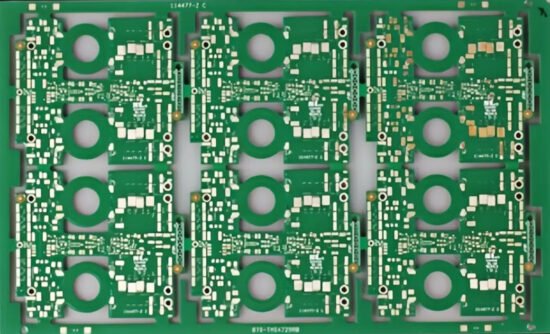
Characteristics and advantages of thick copper power PCB
High current carrying capacity
The most prominent feature of thick copper power PCB is its current carrying capacity far exceeding that of ordinary PCB. The copper foil of conventional PCB is thinner, while the copper foil thickness of thick copper power PCB has increased significantly. We know that when current passes through a conductor, resistance will generate heat. Under the same current and time conditions, the smaller the resistance, the less heat will be generated. As the thickness of the copper foil increases, the cross-sectional area of the wire increases, and the resistance decreases accordingly, the thick copper power PCB can easily carry large current. For example, the on-board charger of an electric vehicle, as the charging power continues to increase, the required current also increases significantly, and ordinary PCBs are difficult to handle, but thick copper power PCBs can stably transmit such large currents to ensure the smooth charging process.
Excellent heat dissipation performance
When electronic equipment is working, power devices generate a lot of heat. If the heat cannot be dissipated in time, the temperature of the equipment will be too high, which will affect the performance and life. Thick copper power PCB has obvious advantages in heat dissipation. Copper itself has excellent thermal conductivity. The thick copper layer is like an efficient “heat carrier”, which can quickly transfer the heat generated by the power device to the entire PCB, and then dissipate the heat through contact with the external radiator or natural convection. For example, in photovoltaic inverters, the use of thick copper power PCB can significantly reduce the operating temperature of the power module, significantly improve the conversion efficiency and reliability of the inverter, and extend the service life of the equipment.
Good mechanical strength and stability
In some complex working environments, such as industrial equipment may face vibration and impact, automotive electronics must withstand the bumps during vehicle driving, and the PCB of electronic equipment must have sufficient mechanical strength and stability. Thick copper power PCB has a thicker copper foil, which is better than ordinary PCB in mechanical strength, can better resist external mechanical stress, and reduce the probability of faults such as line breakage and loose solder joints. At the same time, it performs well in electrical performance stability. In large current fluctuations and complex electromagnetic environments, it can still ensure stable signal transmission, providing solid guarantee for reliable operation of equipment.
Application fields of thick copper power PCB
Industrial power supply
As the “heart” of industrial equipment, industrial power supply has extremely high requirements for stability and reliability. Thick copper power PCB is widely used in industrial power equipment such as high-power inverters, welding machines, servo drives, etc. Taking the inverter as an example, the current changes frequently and the amplitude is large during operation, and ordinary PCBs are difficult to meet the current carrying and heat dissipation requirements. After using thick copper power PCB, it can effectively carry large currents, reduce line heating, reduce the damage of thermal stress to the circuit board, improve the stability and service life of the inverter, and ensure the continuous and stable operation of industrial production.
New energy vehicles
The development of new energy vehicles is inseparable from the support of advanced electronic technology, and thick copper power PCB plays an important role in it. In the battery management system of electric vehicles, it is necessary to accurately monitor and control the charging and discharging process of the battery, and the transmission and processing of large currents are indispensable. Thick copper power PCB can meet the battery management system’s demand for high current carrying capacity and ensure the safe and efficient operation of the battery pack. In addition, in key components such as on-board chargers and motor controllers, thick copper power PCBs have improved the power density and reliability of these components with their excellent heat dissipation and current carrying performance, and promoted the continuous advancement of new energy vehicle technology.
Communication base station power supply
With the popularization of 5G communication technology, the number of communication base stations has increased significantly, and the requirements for base station power supply have also increased. 5G base stations have high power, generate a lot of heat when working, and require a stable power supply to ensure the stability of communication signals. Thick copper power supply PCB can carry the large current required by the base station power supply, while effectively dissipating heat, ensuring that the power module works stably under high temperature and high load environments, and providing reliable guarantees for the stable operation of 5G communication networks.
Aerospace equipment
Aerospace electronic equipment often faces extremely complex working environments, such as high temperature, low temperature, strong electromagnetic interference, high impact vibration, etc. Thick copper power supply PCB has become an ideal choice for electronic equipment in these fields with its high current carrying capacity, excellent heat dissipation performance, good mechanical strength and electrical stability. In radar systems, missile guidance systems, satellite communication equipment, etc., thick copper power supply PCB can ensure that the equipment can operate reliably in harsh environments, providing key technical support for the development of national defense security and aerospace industry.
Thick copper power supply PCB has become an indispensable core component of many high-power electronic equipment with its superior current carrying capacity, heat dissipation performance and reliability in complex environments. Although there are many challenges in the manufacturing process, with the development of material innovation, process upgrades and structural integration, the performance of thick copper power PCB will continue to improve, and the application areas will continue to expand, injecting new vitality into the development of the electronics industry and promoting technological innovation and progress in various industries.